- erp
- Registration
- Quick campus
Cloud ERP: Why Businesses Move to Cloud-Based ERP Systems
- January 09,2026
- - By Admin
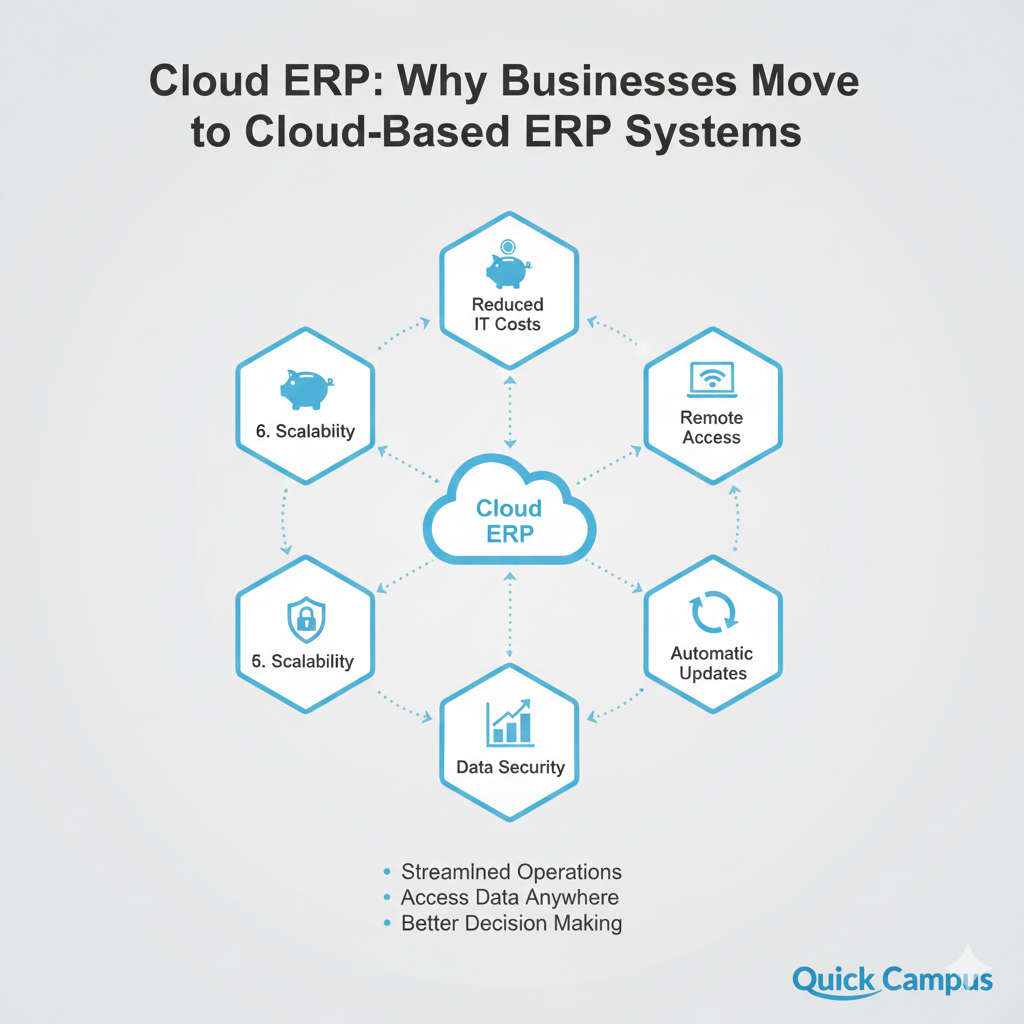
In the modern landscape of digital transformation, the way an organization handles its core data is shifting from dusty office servers to the agile world of the cloud. For a project manager or a school administrator, the goal is always the same: streamlining operations and eliminating manual errors. This is why enterprise resource planning erp has become the gold standard for management.
If you are evaluating how your business operates, understanding the move toward a cloud based erp system is essential. Below, we break down why the cloud is winning the battle against the traditional premise system.
What is cloud ERP and how does it work?
A cloud based erp system is a suite of management software that allows organizations to access their data over the internet. Unlike a traditional setup, you don't need to host the software on your own local computers. Instead, the software is hosted on secure, high-end data centers managed by your erp vendor.
How does it work? It functions through a simple internet connection. When a staff member at a school—for instance, using
What is cloud-based ERP software?
In simple terms, cloud-based ERP software is the actual tool used to manage diverse functions like inventory management, finance, and HR. For educational institutions, this means having a specialized school management software that handles everything from the classroom to the back office.
When you use a cloud-based plan erp, you are essentially hiring the vendor to handle all the "heavy lifting" of IT. The erp vendor takes care of software updates, server security, and backups. This allows your team members to focus on their actual jobs—teaching and administration—rather than troubleshooting technical glitches.
What is ERP in cloud computing?
In the context of cloud computing, ERP is often referred to as SaaS (Software as a Service). It utilizes the shared resources of the cloud to provide a platform that is scalable and flexible. This is a massive leap for supply chain management and institutional logistics.
By using the cloud, a school can manage multiple branches across different cities through a single dashboard. Because the business operates on a unified platform, the "data silos" of the past are eliminated. Every project manager knows that having a single source of truth is the fastest way to improve efficiency.
Cloud-Based ERP vs. Traditional Premise System
The shift from an on-premise system to the cloud is driven by several critical factors:
-
Deployment Speed: An on-premise system can take months to set up. A cloud ERP can be deployed in a fraction of the time.
-
Accessibility: Traditional systems require you to be physically present in the office. Cloud systems only require an internet connection.
-
Cost Structure: On-premise requires huge upfront investment in hardware. Cloud ERP helps reduce costs by using a subscription-based model.
-
Maintenance: With an on-premise system, you need a dedicated IT team. In the cloud, the erp vendor handles all maintenance.
Why Businesses and Schools are Making the Switch
1. Maximizing Operational Efficiency
Manual data entry is incredibly time consuming. By automating workflows—such as generating student reports or tracking inventory management—an ERP significantly boosts operational efficiency. It frees up your team members from repetitive tasks, allowing them to focus on high-value initiatives.
2. Better Customer Service
In the education sector, your "customers" are parents and students. A cloud ERP allows for better customer service through parent portals, instant SMS alerts for attendance, and online fee payments. Transparency leads to trust, and trust leads to better retention.
3. Real-Time Insights for Informed Decisions
You cannot manage what you cannot measure. A cloud ERP provides real-time analytics. Whether it is tracking the budget or monitoring student enrollment trends, having instant access to reports allows the management to make informed decisions that drive growth. You can read more about industry trends in our
4. Cost Reduction and Scalability
One of the most attractive benefits is the ability to reduce costs. You no longer need to pay for physical space for servers, electricity for cooling, or expensive IT consultants. Furthermore, as your institution grows, your cloud based erp system scales with you effortlessly.
What is the New ERP System in the Cloud Market?
The "New ERP" is no longer just a digital filing cabinet. Modern systems like Quick Campus are designed as "Intelligent Platforms." These systems integrate:
-
AI-Driven Analytics: To predict financial trends and student outcomes.
-
Mobile Integration: Ensuring the software is accessible via apps for parents and teachers.
-
Automated Supply Chain Management: To handle school books, uniforms, and cafeteria stocks without manual intervention.
Overcoming the "Time Consuming" Implementation Myth
Many organizations hesitate to switch because they believe the transition is too time consuming. While erp implementation does require planning, modern cloud tools make data migration smoother than ever. A professional erp vendor will provide a roadmap that ensures your team members are trained and the data is moved without any downtime.
Conclusion: Lead with Quick Campus
The verdict is clear: the age of the local, restricted premise system is over. To thrive in a digital-first world, your business operates best when it is backed by the power of the cloud.
Recent Posts
All Category
- Edtech
- Digital Marketing
- Web Development/Design
- Cloud Based ERP
- Tender Opportunities
- Improve
- Registration
- Tips to Master