- erp
- Registration
- Quick campus
ERP vs CRM vs SAP: Choosing the Best Cloud-based ERP Solutions
- January 09,2026
- - By Admin
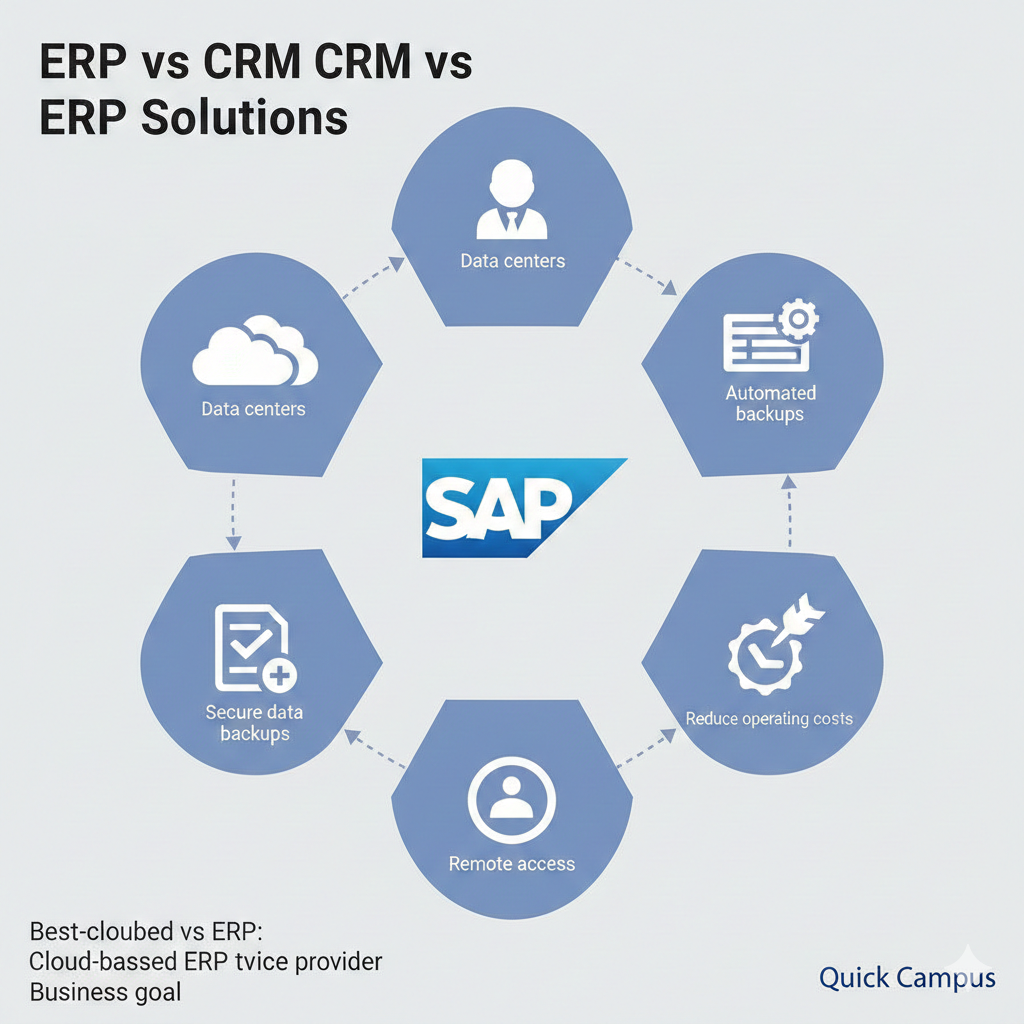
Choosing the right business management software can be the turning point for an organization's success. Whether you are a school administrator looking to modernize with Quick Campus or a business owner aiming for global expansion, understanding the interplay between ERP, CRM, and SAP is vital.
This guide provides a comprehensive analysis of these systems, their role in digital transformation, and how they help you achieve your primary business goal.
Table of Content
- ERP vs CRM: The Core Differences
- SAP Defined: Why It’s the Gold Standard
- Cloud Computing: Modern ERP and CRM Models
- The 4 Types of CRM Systems
- Comparing Top ERP Players
- Career Growth: Salaries and Learning SAP
- Key Takeaways for Your Business
1. ERP vs CRM: What is the Real Difference?
At its heart, the difference between these two systems lies in their focus. While both are designed to improve productivity, they look at the business from different angles.
- CRM (Customer Relationship Management): Think of CRM as your "Front-Office" engine. It manages how you interact with clients or parents. It tracks leads, automates marketing for your products or services, and provides tools for better customer relationship management crm.
- ERP (Enterprise Resource Planning): This is your "Back-Office" powerhouse. It integrates all internal streamlined processes, from production processes and inventory management to HR and payroll.
The Strategy: Use CRM to increase your profit margins by acquiring more customers, and use ERP to reduce operating costs by allocating resources more effectively.
2. Is ERP a SAP System?
Many people use the terms interchangeably, but it is important to clarify: ERP is a category; SAP is a brand. SAP (Systems, Applications, and Products) is the world’s most famous erp vendor. While there are many other systems like Oracle or Microsoft Dynamics, SAP is often preferred by large-scale enterprises for its ability to handle complex cash flows and global supply chain management.
3. CRM and ERP in Cloud Computing
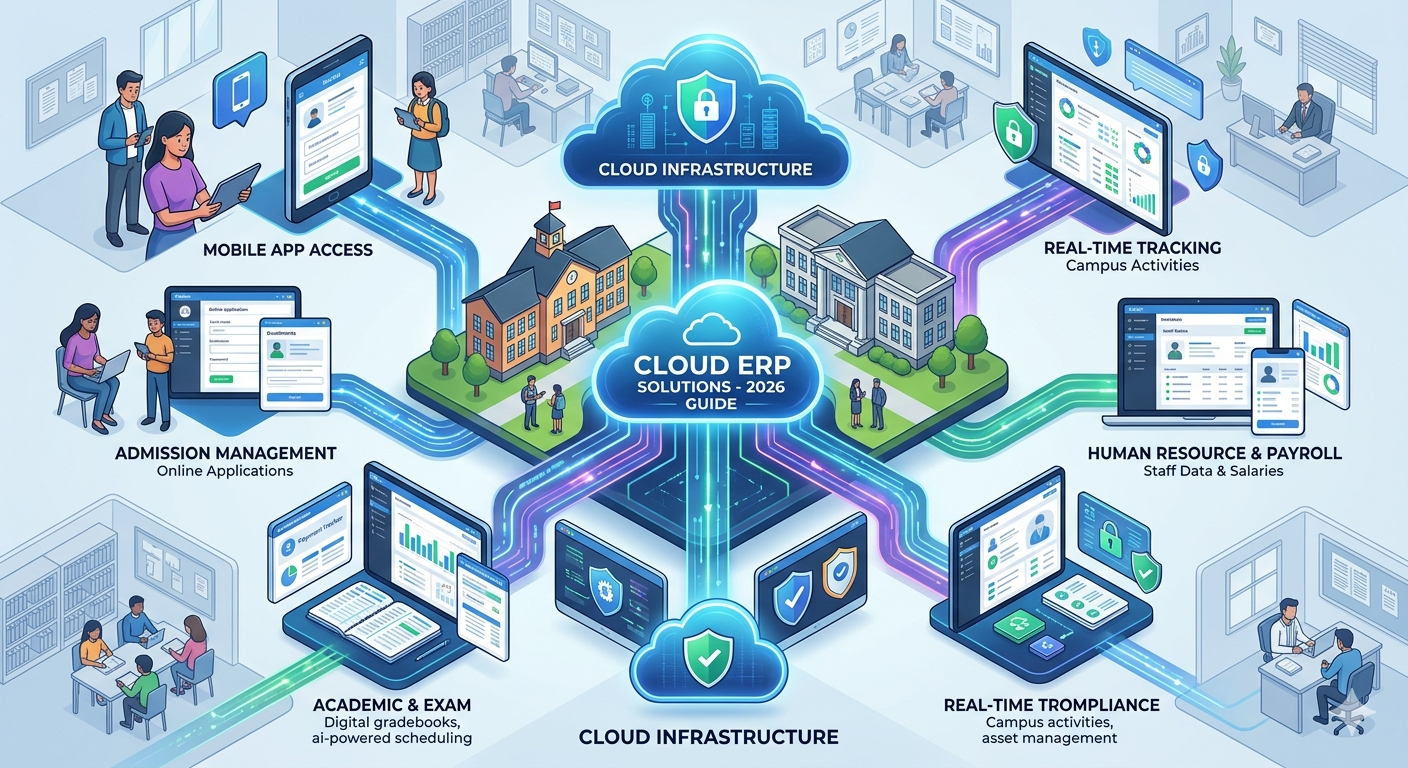
The shift to the cloud has changed how every business operates. Traditional premise systems required physical servers and heavy maintenance. Today, cloud based erp system solutions host your data in secure, high-speed data centers.
This shift allows for:
- Secure access: You can access financial data from any internet connection.
- Remote locations: Your team members can collaborate whether they are in the office or working from home.
- Data from anywhere: Managers can make data driven decisions on the fly using web browsers on mobile or desktop operating systems.
4. Understanding the 4 Types of CRM
To reach your specific business goal, you must identify which CRM type you need:
- Operational CRM: Focused on automation (Sales, Marketing, Service).
- Analytical CRM: Analyzes customer data to find patterns and improve retention.
- Collaborative CRM: Ensures different departments (like marketing and support) share the same student or client info.
- Strategic CRM: Focuses on long-term relationships and building a brand.
5. Which ERP is Better? (A 2026 Comparison)
Choosing the right system depends on your industry and scale. For educational institutions, a generic system won't work. You need a platform that understands student life-cycles.
The career outlook for ERP professionals is exceptionally bright. As more small businesses embrace digital transformation, the need for skilled consultants has surged.
- Average Salary: In India, an SAP ERP professional earns an average of ₹23.7 Lakhs annually, with top earners reaching over ₹70 Lakhs.
- Roles: You can work as a project manager, Functional Consultant, or Business Analyst.
- Can I learn SAP in 1 week? Honestly, no. While you can learn to run Tally or navigate basic management software quickly, SAP is a deep ecosystem. Mastering it requires months of training in process improvement and specific modules like FICO or MM.
7. Key Takeaways: How to Choose?
Before you invest, you must evaluate your key performance indicators kpis. Ask yourself:
- Are we losing money due to manual errors in accounting data? (You need an ERP).
- Is our lead conversion rate low? (You need a CRM).
- Are we struggling with risk management and data silos? (You need an integrated cloud system).
The Power of Integration
Modern software like Quick Campus combines the best of both worlds. It offers the back-office strength of an ERP (managing fees and payroll) with the front-office communication of a CRM (parent-teacher interactions). This integration helps save time and allows you to focus on your core mission: education.
8. Benefits for Schools and Small Businesses
For a small business or an educational institute, the benefits of moving to a cloud based erp system are immediate:
- Reduce Costs: No more local server maintenance.
- Improved Efficiency: Automated fee reminders and automated backups.
- Informed Decisions: Real-time visibility into your school’s financial health.
- Multi-user Access: Allow chartered accountants to audit your books remotely without stopping daily work.
Conclusion
The debate isn't just about ERP vs CRM vs SAP; it's about finding the right software solutions that allow your business to grow. By embracing streamlined processes and making data driven decisions, you ensure that your organization remains competitive in a fast-paced digital world.
If you’re ready to see how high speed, cloud-native technology can transform your school, explore Quick Campus today. For more expert advice on management software, stay tuned to our latest blogs.
Recent Posts
All Category
- Edtech
- Digital Marketing
- Web Development/Design
- Cloud Based ERP
- Tender Opportunities
- Improve
- Registration
- Tips to Master