- erp
- Registration
- Quick campus
Future of Education: 2030 AI Trends & Cloud ERP Systems
- February 04,2026
- - By Admin
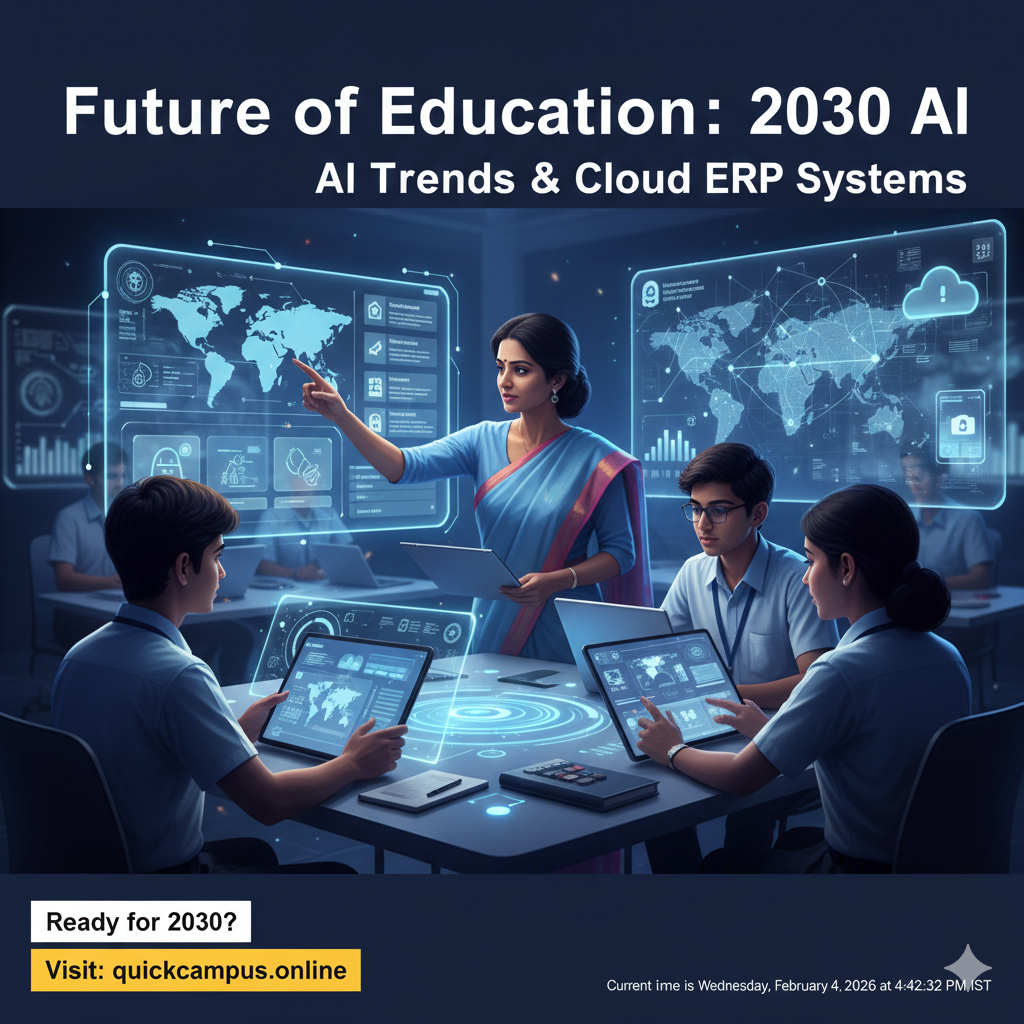
The global education landscape is undergoing a radical shift. As we navigate through 2026 and look toward 2030, the traditional classroom is being redefined by artificial intelligence and high-performance cloud erp systems. For students and educators, understanding these trends is no longer optional—it is a survival skill to make an informed decision for the future.
In this guide, we explore the future of the EdTech industry, the careers that will dominate the next decade, and why school management software has become the backbone of modern learning.
What is the Future of the EdTech Industry?
The EdTech industry is moving away from simple video lessons toward fully integrated ecosystems. This growth is fueled by a shift toward a cloud infrastructure that supports personalized learning at scale.
The Rise of the Autonomous Campus
Future institutions will function as "Smart Campuses." Through a single campus erp login, students will access their grades, AI-driven tutoring, and even campus navigation. For administrators, erp software systems will automate everything from financial forecasting to infrastructure maintenance, allowing for a better user experience across the board.
Hyper-Personalization and Improved Communication
AI will analyze erp student data to create custom learning paths. If a student struggles with calculus, the education erp will automatically adjust their curriculum. Furthermore, AI chatbots are becoming standard in School Management Systems, ensuring improved communication between the institution and parents through 24/7 support.
Which Education Field is Best for the Future?
As technology evolves, certain fields are seeing explosive growth. If you are planning a career for the next five years, focus on these areas to ensure a cost effective education:
- AI Specialists in Pedagogy: Designing systems that help teachers teach better through data driven decisions.
- Learning Experience Designers (LXD): Creating user friendly interfaces for digital learning environments.
- Cybersecurity for Education: Protecting sensitive data within cloud erp software.
- Instructional Design for AR/VR: Creating immersive lessons that save time and increase retention.
For administrators, expertise in managing an admission management system or becoming an erp service consultant will be highly lucrative.
Which EdTech Platform is Best?
The "best" platform is one that offers an All In One School ERP Software experience. In India, the demand for localized solutions has led to the rise of School ERP India Software.
The All-In-One Advantage
Modern institutions in the capital are specifically looking for School ERP Software in Delhi that provides seamless integration between modules. Top platforms focus on:
- Online Admission Software: To streamline complex admissions processes.
- School Accounting Software: To manage fee payments and generate detailed financial reports.
- Student Management Systems: To keep a 360-degree view of every learner.
Platforms like QuickCampus lead the way by providing cloud based erp software that ensures data is accessible anytime via an erp app.
What Skills are Needed in Educational Technology?
To thrive in an erp india environment, staff and students need a new set of essential skills:
1. Digital Literacy & Information Systems
Educators must be proficient in using school master software to track progress. Administrators must understand how it management software and information systems can reduce costs while improving quality.
2. Data Fluency & Project Management
School leaders must be able to read reports generated by their school erp system. Mastering project management within an ERP helps in implementing new modules without disrupting daily business operations.
3. Role Based Access & Security
As we use more cloud erp solutions, understanding role based access is critical. It ensures that sensitive student data is only seen by authorized personnel, maintaining privacy and trust.
The Role of Cloud ERP in Modern Schooling
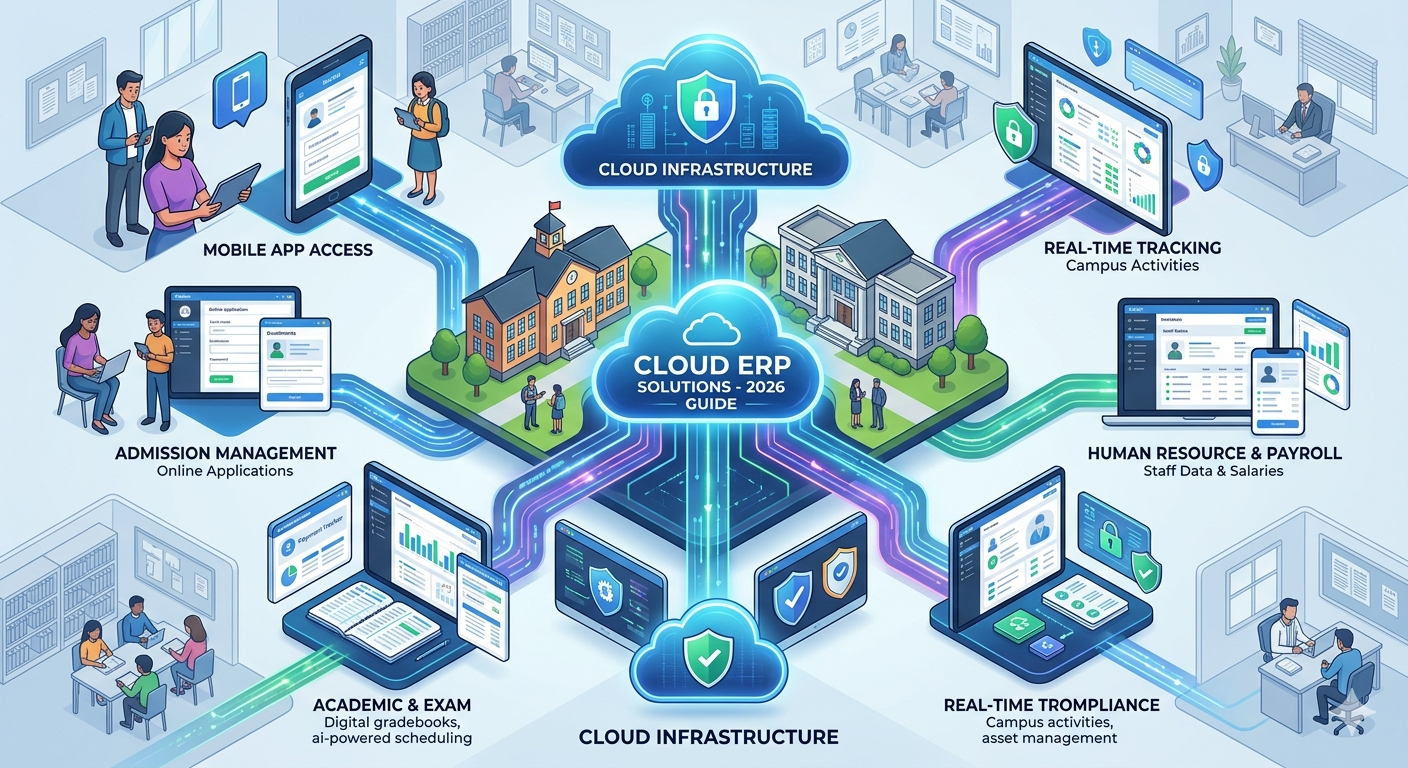
In the past, school software was installed on a single computer. Today, cloud management software ensures that:
- Security: Data is protected by advanced cloud erp security protocols.
- Accessibility: Teachers mark attendance on a teacher app while walking to class.
- Real-time Updates: Parents get instant notifications through their erp login when a child enters or leaves the campus.
Streamlining Admissions in 2026-2030
The first point of contact for any parent is the admission management system. The future of admissions is paperless.
- Step 1: Parents find the school online and evaluate the user experience.
- Step 2: They fill out an online admission software form.
- Step 3: Data migration tools automatically move details into the permanent erp student profile.
- Step 4: Fees are paid via the mobile app.
This service erp model reduces the workload on the front-office staff by 60%, allowing them to focus on parent customer support rather than data entry.
Real-World Impact: The Delhi Education Model
In Delhi, School ERP Software in Delhi is no longer a luxury. School Management Systems in the city are now using AI to predict which students might need extra help. By analyzing data stored in the school erp, these systems provide early warnings to teachers, helping them make an informed decision on intervention.
Conclusion: Preparing for the 2030 Horizon
The future of education is a blend of human empathy and cloud erp systems. We are moving toward a world where technology handles the "admin" while teachers focus on the "human."
Whether you are looking for a pg school management software or an erp school solution, the goal remains the same: creating a seamless integration between learning and management.
By investing in an all in one school erp software, institutions ensure they are preparing for 2030.
Ready to transform your institution? Explore our latest blogs or see how a Cloud ERP Based Solution can redefine your school's future. From the first erp login to final graduation, QuickCampus provides the tools you need.
Recent Posts
All Category
- Edtech
- Digital Marketing
- Web Development/Design
- Cloud Based ERP
- Tender Opportunities
- Improve
- Registration
- Tips to Master