- Quick campus
Introduction to ERP: Complete Guide to Enterprise Resource Planning Solutions
- March 19,2026
- - By Admin
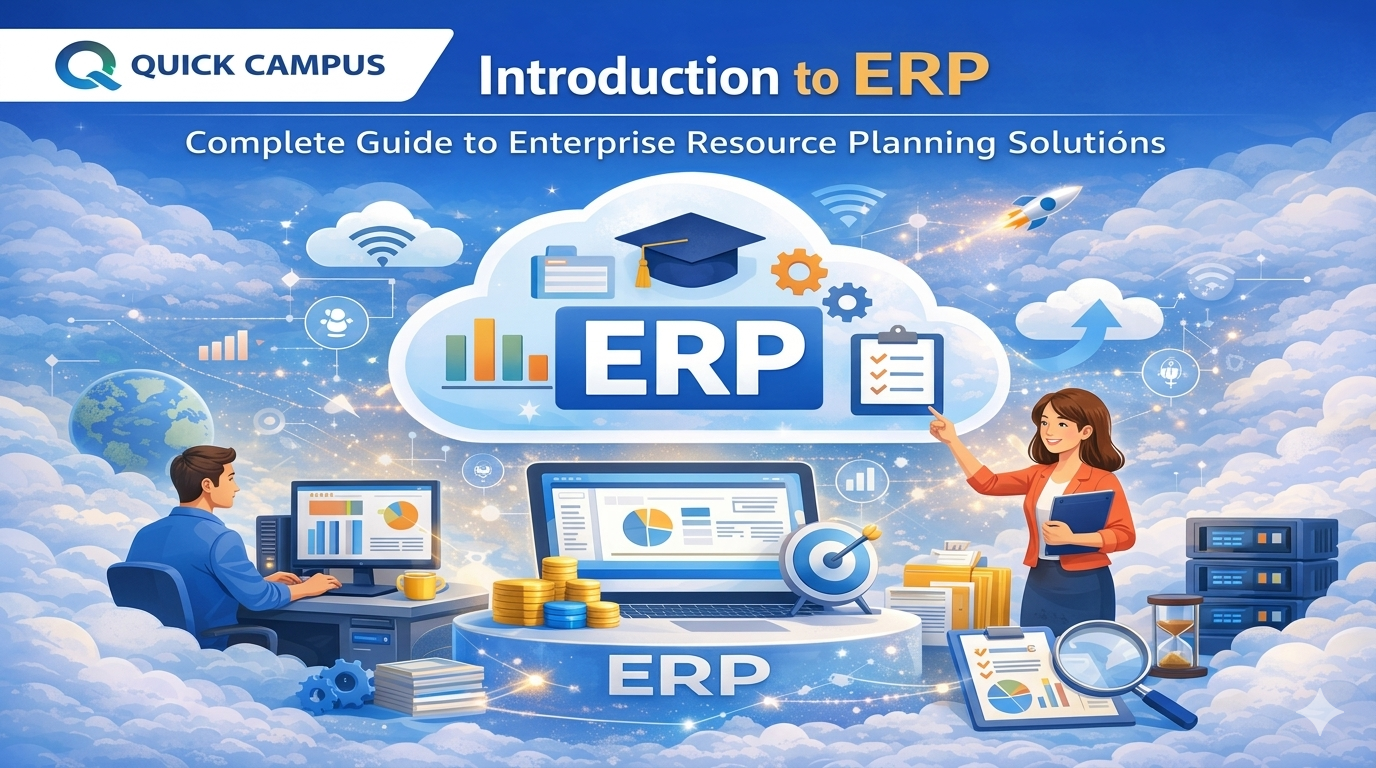
In the modern digital era, the efficiency of an organization—whether it is a multinational corporation or an educational institution—depends heavily on how it manages its data. Enter Enterprise Resource Planning (ERP). As we move through 2026, cloud erp systems have become the backbone of operational excellence, helping project managers and administrators maintain visibility and control.
For schools and colleges in India, transitioning to an All In One School ERP Software is no longer a luxury but a necessity. By choosing a high-quality erp service, institutions can make an informed decision based on real time insights, moving away from time consuming manual paperwork.
What is “ERP”?
At its simplest, ERP stands for Enterprise Resource Planning. It is a type of it management software that allows an organization to automate processes across a suite of integrated applications. These applications manage core business process functions related to technology, services, and human resources.
In the context of the Indian education sector, an erp school uses this technology to integrate every department—from the admission management system to the classrooms and the accounts office. Instead of having separate spreadsheets for fees, attendance, and exams, a school master software brings everything into a single database. This ensures that all school data secure protocols are met while providing a user friendly interface for staff.
Enterprise Resource Planning (ERP) Solutions
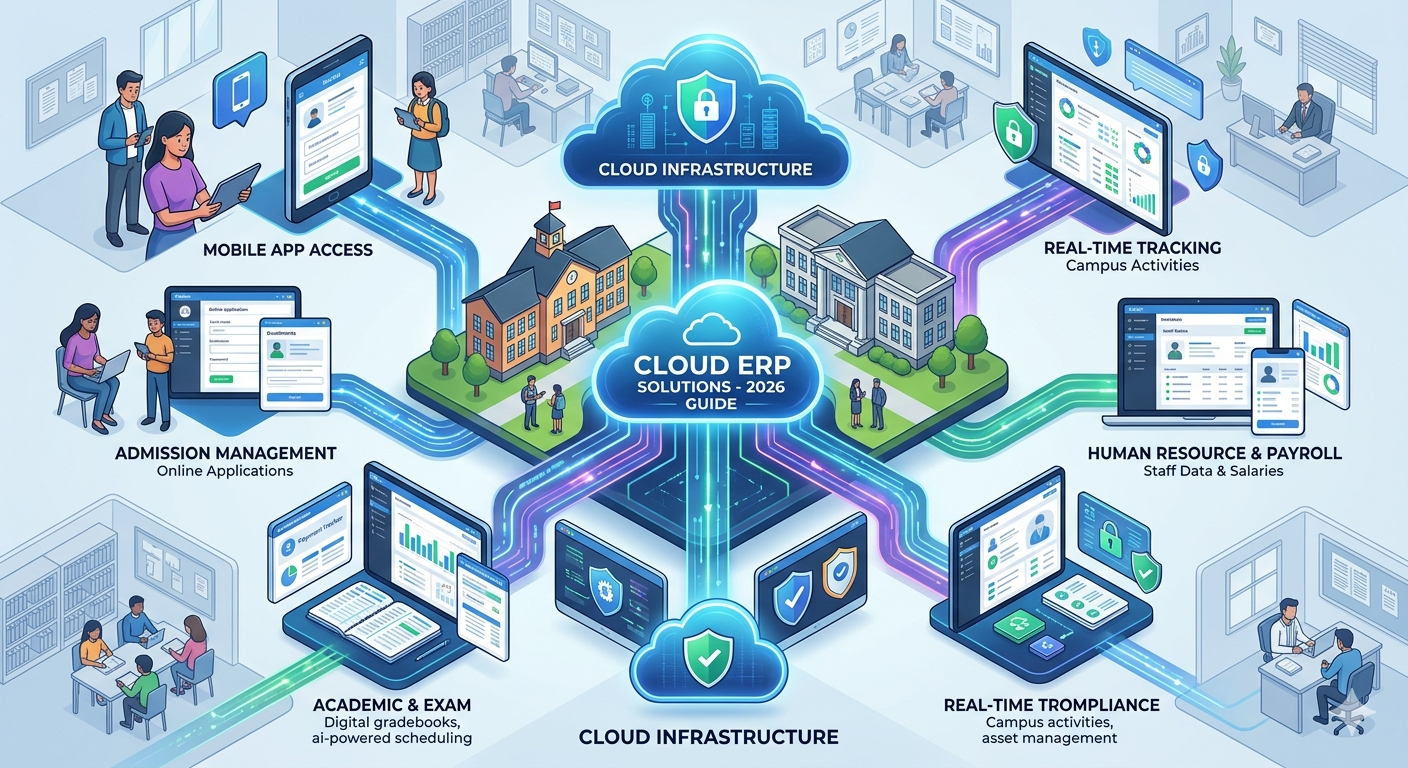
Modern enterprise resource planning (erp) solutions are primarily delivered via the cloud. Cloud erp software allows users to access data in real-time from any location using mobile devices. This is particularly useful for School ERP Software in Delhi or other metropolitan hubs where administrators need to manage multiple branches remotely.
Types of ERP Solutions:
-
Cloud ERP: Hosted on the provider's servers and accessed via the internet. It is highly scalable and reduces the need for heavy local hardware.
-
On-Premise ERP: Installed locally on a school's own computers and servers.
-
Hybrid ERP: A combination of both, allowing some data to stay local while utilizing cloud erp solutions for mobile access.
For most modern campuses, erp software cloud based models are preferred because they improve efficiency and offer lower upfront costs compared to legacy erp software systems.
Enterprise Resource Planning (ERP): Explained
To truly understand how a School ERP System works, imagine it as the central nervous system of a body. It helps schools manage complex workflows by ensuring all modules seamlessly integrate. When a student completes an online admission software form, the ERP triggers a chain reaction:
-
The Student Management Systems create a new profile instantly.
-
The school accounting software generates a fee payment invoice.
-
The library management module assigns a digital library card.
-
The erp student receives their erp login credentials via the mobile app.
This automation saves time and ensures that no data is lost and no manual entry is duplicated. In erp india, this level of real time tracking is helping educational institutions achieve better resource allocation.
What are the Advantages of ERP Solutions?
Investing in a specialized ERP for School provides numerous long-term benefits. Whether you are using pg school management software for higher education or a standard School ERP for K-12, the advantages are clear:
1. Data Driven Decisions
Administrators can access real time insights through a dashboard. From tracking daily fee payment collections to monitoring student performance via report card software, every data driven decision is backed by facts rather than guesswork.
2. Improved Financial Management
Robust school accounting software simplifies the financial management of the institution. It automates scholarship tracking, late fee calculations, and salary disbursements, which traditionally were very time consuming tasks.
3. Enhanced Security and Compliance
Top-tier cloud management software ensures that sensitive student and financial records are data secure. In 2026, maintaining security and compliance with national education policies is a top priority for school administration.
4. Better Communication via Mobile App
With a school erp app, the gap between parents and teachers closes. Parents can use their campus erp login on their mobile devices to check progress and receive urgent notifications instantly.
Enterprise Resource Planning: Human Resource Module
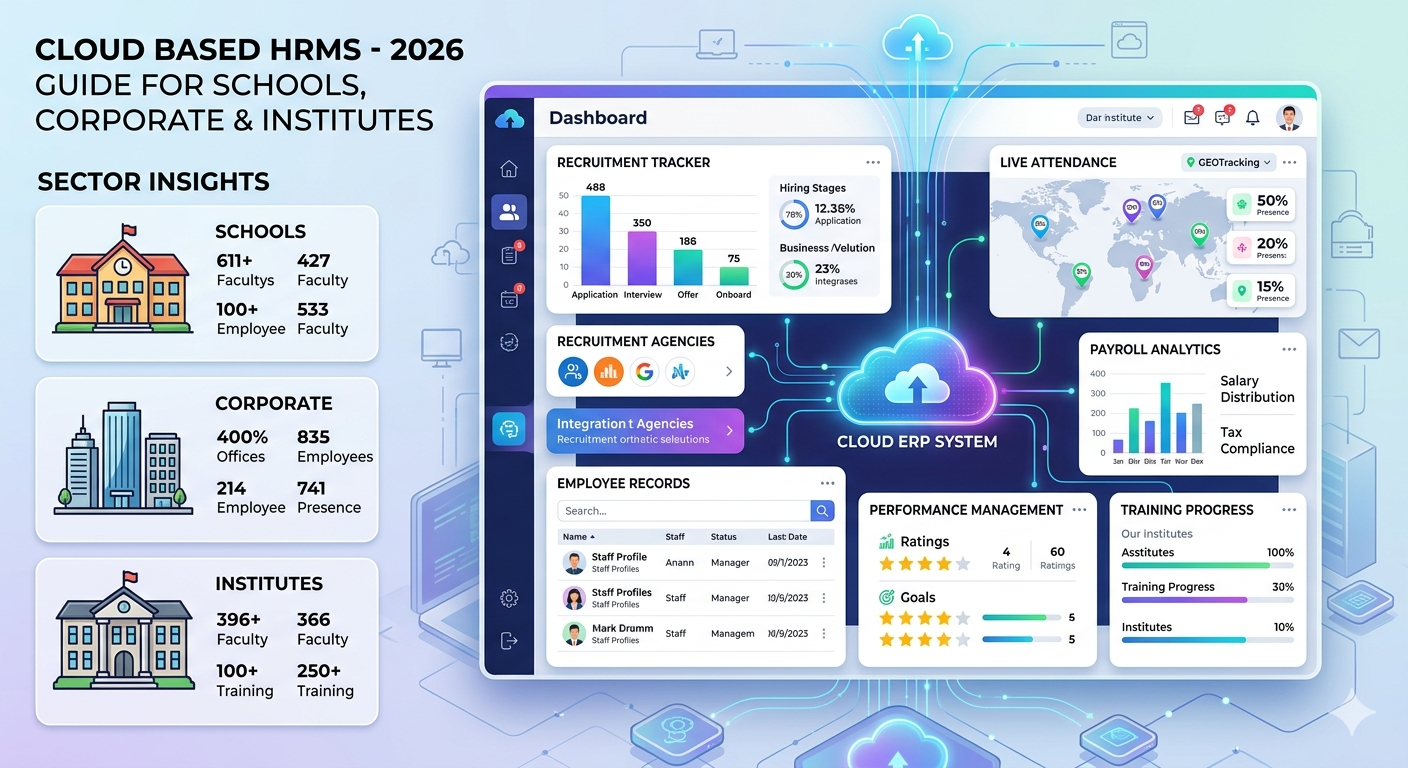
A critical but often overlooked component of education erp is the Human Resource (HR) module. In a school, the "resources" are the teachers and staff, and managing them requires efficient school management systems.
The HR module in an All In One School Software manages:
-
Payroll Integration: Automatically calculating salaries based on attendance.
-
Recruitment: Managing the lifecycle of staff applications from the initial erp login.
-
Performance Tracking: Evaluating teacher effectiveness through data stored in the school management software.
By utilizing a service erp that includes a robust HR module, schools ensure that their internal staff management is as efficient as their student management.
Choosing the Best School ERP Software in India
When looking for an erp implementation, schools must look for a provider that understands the local landscape. QuickCampus offers a School ERP India Software that is specifically designed for the nuances of Indian boards (CBSE, ICSE, and State Boards).
Key Features to Look For:
-
Admission Management System: A smooth online admission software experience.
-
Support: Reliable customer support to assist during the data migration phase.
-
Branding: Integrated
Digital Marketing and Branding Solutions
Troubleshooting the ERP Transition
Moving to a cloud erp environment can sometimes involve a complex data migration process. To avoid hurdles, choose a provider that offers a user friendly interface and comprehensive training.
Proper training turns a complex it management software into a tool that truly improves efficiency. You can find more tips on successful transitions on our
Conclusion: The Future of Education is Integrated
The evolution of Enterprise Resource Planning (ERP) has transformed schools from paper-heavy offices into streamlined, digital hubs. By adopting
From the initial admission management system to the final graduation ceremony managed via pg school management software, an ERP system is the thread that ties a modern school together.
Are you ready to transform your institution with the best school ERP software?
-
Explore our
Cloud ERP Based Solutions -
Discover how we help schools grow on our
Homepage
Recent Posts
All Category
- Edtech
- Digital Marketing
- Web Development/Design
- Cloud Based ERP
- Tender Opportunities
- Improve
- Registration
- Tips to Master